
Sharing SHiFTs by Amanda ~ Where Does Willingness Come From?

Willingness is the key to working a successful recovery program. When food addicts come into our programs some are willing to do anything to get into recovery while others wonder how they can become willing to work through the activities that will result in long-term recovery.

Though there is no one place where someone can go to pick up a jar of willingness, there are a few ways a food addict develops willingness. The most common way is to get to a point of feeling so much pain that the food addict is willing to do anything to stop feeling the intense pain that is now part of their life. This is known as hitting a bottom.

When a food addict hits a bottom, it’s literally that – the bottom of the pain they can tolerate. The pain has become unbearable and the food addict has hit the bottom of the container of pain that is possible for them to experience.

For some food addicts, hearing about this intense pain and knowing that they are headed in that direction, helps them to develop willingness as a means of avoiding future pain. In other words, these food addicts become willing to get into recovery so that they don’t have to hit bottom and experience intense pain.

Another way, a food addict becomes willing is to meditate on the idea of what willingness looks like in their lives. If this person were willing, what would they do?  How would they act? What steps would they take that they are not willing to right now? Putting our focus on something, oftentimes brings that into our lives.

This doesn’t mean that we can simply demand willingness to appear and it will.  Sometimes focusing on willingness may take days, months, or even years.

We’ve heard of several food addicts who were unwilling to enter a recovery program for over ten years then woke up one day willing to do anything to bring recovery into their lives.

We are all different and willingness comes to each of us in our own unique way.  The best thing we can do is to remember just how important willingness is to our recovery program.

Sharing SHiFTS by Amanda ~ If Nothing Changes, Nothing Changes

I can’t do that!
There’s no way I’d ever give up eating sugar!
I absolutely will not weigh and measure my food!

We hear these things regularly and my answer to all of that comes from a Twelve Step slogan – If nothing changes, nothing changes!

It’s really quite simple. If a food addict wants recovery then things have to change. It is absolutely impossible to get into recovery without making lifestyle changes. Of course, everyone wants some sort of “magic” pill or potion that will change their lives.

To be clear, the only way a food addict can get into recovery is to make lifestyle and behavioral changes. Period. No bargaining. No negotiation. Changes must be made if recovery is to happen. There is no other way.

Some of these changes must be major such as following a nonaddictive food plan while others may be smaller like staying in the perimeter of the grocery store when shopping. Whatever size they are, each change is a step towards food addiction recovery and living a life free from obsession with food.

The good news is that when things change, things change and there is an opportunity for a new beginning and a new life. A new life that is built one change at a time.

We have seen thousands of food addicts come into our programs hopeless who turned each change they made into exciting lives filled with freedom from obsessing about food.

If nothing changes, nothing changes but if everything changes, everything changes!

Sharing SHiFTs by Amanda ~ Feeling Good!

Is it okay to feel good when people are suffering?

This is a question we hear from food addicts even when things in the world aren’t as extraordinary as they currently are and the answer then, as now, is the same: YES! It is okay to feel good even though some people are suffering.

Feeling bad doesn’t help to make things better for anyone. Quite the opposite. Feeling good can help others to understand what’s eventually possible for them, offering a way for them to cope better with the events currently taking place in their lives.

When a food addict first enters our programs and meets living examples of people in recovery, they experience hope in a way that they never could otherwise. For the first time in their lives, they understand that it is possible for them to experience freedom from food obsession and feel good.

Seeing others feel good about their lives and their recoveries provides hope to those who are still suffering. It also allows others to understand that food addiction recovery is possible for them, too.

While we cannot ignore the suffering of other people and being insensitive to this suffering can be hurtful, we each must walk our own path and know that we are individuals experiencing what we are meant to at each moment in time. Comparing ourselves to others, or trying to feel bad to join them in their suffering does not serve them or us in any way. It actually increases the suffering in the world rather than offering hope of a time when there won’t be so much pain.

As recovering food addicts, we have more than earned the right to feel good about ourselves. This does not mean we are arrogant or self-righteous but that we recognize our value as human beings, neither above nor below anyone else.

It’s okay to feel good!

Sharing SHiFTs by Amanda ~ One Foot In Front Of The Other

Sometimes recovery can be a slog. It can be a difficult and tedious struggle, taking every ounce of energy we have to maintain. There are days when we don’t know how we will make it through without reaching for those foods that once seemed to offer comfort. And this can be even worse during difficult circumstances.

It’s during these times that we need to put one foot in front of the other and focus on where we are. We need to stop thinking about anything else besides getting through the next minute abstinently. While we will need to plan our meals and make sure we have abstinent food, beyond that, we need to focus on today and keep taking one step at a time towards recovery.

We need to stay where our feet are and not get wrapped up in the worries of what will happen tomorrow or how long the events in our lives will last. More than that, we need a laser focus on our recovery, on those things we need to do in order to maintain the progress we’ve made.

We cannot get distracted by world events or wrapped up in fears about what may or may not happen. Recovery needs to be our minute-by-minute, day-by-day priority above every other thing in our lives.  Without exception. Period.

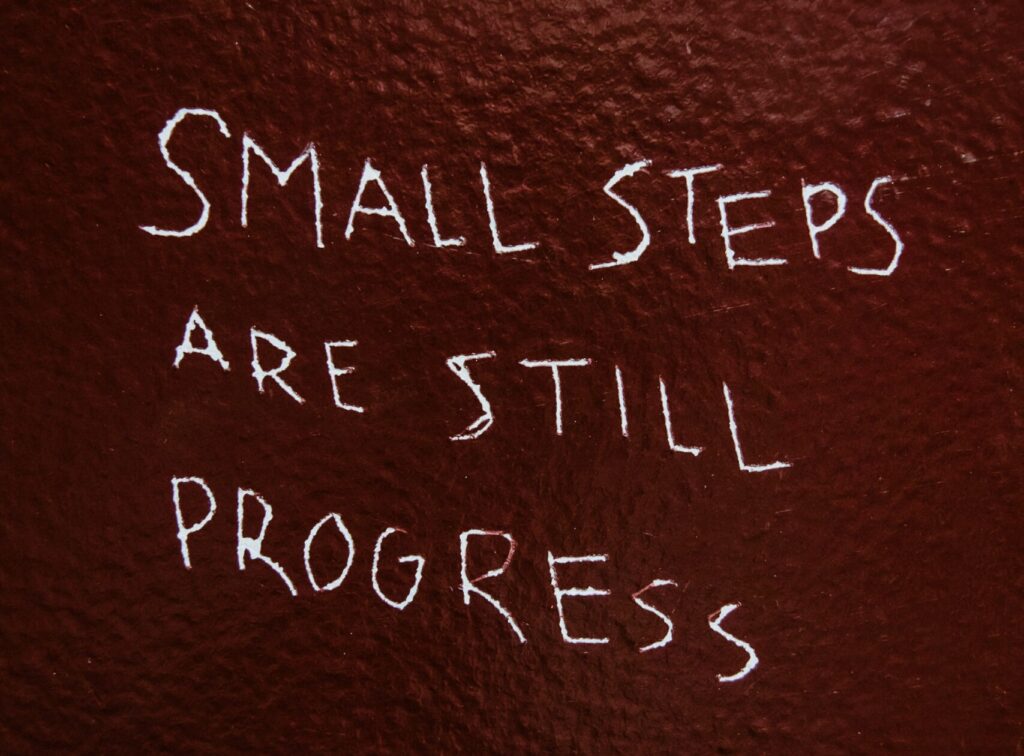
When we are able to do this, our lives will change step by step.

While it may not get easier immediately, if we keep putting one foot in front of the other, we will make a solid path to recovery that will eventually make the process easier. Then, before we know it, we will have a life that is beyond our wildest dreams.

Keep putting one foot in front of the other no matter what’s going on!

Sharing SHiFTs by Amanda ~ Get Creative! Get Recovery!

The closet was small and dark but there was just enough room for a chair and most of all, there was privacy from her family.

For the past three years since treatment, breakfast had been the same. On this day, there would be a different but abstinent protein. The store was out of the regular one.

She couldn’t take it anymore. Her life was out of control and she needed help. But, with most of the nation under stay-at-home orders, what could she do? 

These three people have one thing in common – they got creative during extraordinary times and they got or kept recovery.

All across the country, we are hearing from food addicts who are coming up with creative ways to stay in recovery. In the case of the first woman, she needed privacy to attend a virtual Twelve-Step meeting while the second person needed to find a different breakfast protein due to food shortages and the third one attended our first virtual SHiFT To You Intensive last month and is now in recovery.

There’s no denying that times are challenging and it can be easy to think about giving up or putting off recovery. Doing this only adds to our grief and pain intensifying the anxiety and misery we are feeling. We were always willing to go to any lengths to get binge foods. Now, we need to be willing to go to any lengths for recovery.

Not only do sanity and peace of mind depend on staying in recovery but so does our health. In addition to the many health-related problems that come with food addiction such as heart disease, stroke, high blood pressure, diabetes, etc., studies have shown that those who are obese are at a much greater risk of contracting and dying from the coronavirus.

Now, more than ever, we all need to be motivated by the three people mentioned above and get creative so that we can get recovery!

Take care of yourself and let us know if you need help!

SHiFT Virtual Intensive Treatment Program – May 16 – 23, 2025 + Virtual Aftercare

Our world-renowned SHiFT Virtual Intensive Treatment Program was created to help those suffering from food dependency issues find long-term recovery. The first 8 days are spent in the Acorn Virtual Intensive where attendees are introduced to the concepts and tools needed for recovery. The remaining 10-Week Aftercare Program is used to solidify recovery working with a food addiction counselor.

During this 11-week program, participants report a radical transformation in their relationship to food. They undergo detoxification from addictive foods, experience truly sober eating, and begin the recovery process of addressing underlying issues at a profound level.

Patterned after inpatient treatment for food dependency, this program has been successfully lifting people out of the trenches of food addiction for over 30 years. We have seen thousands of people start their journey towards freedom from food obsession.

The Virtual Intensive is modelled after the in-person Acorn Intensive. It was created during the pandemic as a necessity, but its success rates are equivalent to our in-person Intensive, and so it remains as a treatment option. There are several unique benefits to doing the work virtually. The transition from the Intensive to the Aftercare is seamless, transportation and housing costs are eliminated making it much less to operate, and clients get to practice handling the preparation of their food during the Intensive week.

The Acorn Virtual Intensive is for you whether you are:

  • unsure if you are addicted to food
  • brand-new to food sobriety
  • in relapse
  • a stable “long-timer”

Virtual Intensive Experience: Listen to Client Experience Here  

What’s Included in the 8-Day Virtual Intensive

  • 2 days to work with your Accountability Coach via Zoom on food planning and preparation
  • Sunday through Friday – 6 days fully dedicated to intensive group work (Sample Daily Schedule – Virtual Intensive)
  • 3 process groups a day led by world-renowned food addiction professionals
  • Educational lectures on food addiction
  • Structured activities that support recovery (e.g. group walks)
  • Individual reading and writing assignments
  • Techniques to deal with difficult emotions
  • Staff that are recovering food addicts
  • A personal food plan, including detailed information and one-to-one coaching
  • Peer support and feedback from other group participants
  • A detailed aftercare plan so you can continue your recovery when you leave
  • Access to a large alumni network in stable long-term recovery

What’s Included in the 10-Week Virtual Aftercare Program

  • Daily check-in with a facilitator up to Step 9
  • Weekly 30-minute individual coaching with a SHiFT coach up to Step 9
  • Weekly 3-hour group video conference led by a SHiFT facilitator
    Wednesdays: 9 – 12 PST| 12 – 3 EST
    May 28, June 4, 11, 18, 25, July 2, 9, 16, 23, 30
  • Professional and peer support

Focusing on YOU (this is important!):
Because the complete focus of the Virtual Intensive is on your recovery, no outside distractions are permitted. This means NO telephone calls, TV/video/audio, e-mail, computer, or non-recovery books or activities. Please do not make commitments (e.g. job concerns) requiring outside attention during the 6 Intensive days of program (Sunday – Friday).

If you are ready to receive treatment for your food addiction, join us to experience the SHiFT: Sobriety, Hope, Freedom, and Transformation.

Cost: $4,100 includes 8-Day Virtual Intensive plus 10 Week Aftercare

(Payment plans available upon registration)

For more information, contact Raynea at contact@foodaddiction.com or 941-378-2122