If You’ve Tried Everything…Read This Before You Give Up

If you’ve ever found yourself saying, “I’ve tried everything,” you’re certainly not alone. In fact, it’s probably one of the most common things we hear from people who reach out to SHiFT.

And honestly? We believe you.

By the time someone starts looking into food addiction treatment, they’ve usually accumulated quite the résumé: countless diets, meal plans, weight-loss challenges, detoxes, pay-and-weigh programs, calorie-counting apps, coaches, support groups, fitness memberships, and enough nutrition books to open a small library. Somewhere along the way, there was almost certainly a Monday morning declaration that “this time will be different.”

Maybe it was different — for a little while.

Then life happened. Stress happened. Emotions happened. And before long, you found yourself back in the same exhausting cycle, wondering what was wrong with you.

Here’s what we’d like to suggest:

Nothing is wrong with you.

The uncomfortable truth is that most weight-loss programs were never designed to treat food addiction. They were designed to help people lose weight. For someone whose struggle is rooted in addiction—not simply eating habits—that’s a very different problem to solve.

It’s a bit like trying to fix a broken arm with cough syrup. The cough syrup might be perfectly good medicine…it’s just treating the wrong condition.

Unfortunately, many people don’t see it that way. Instead, they assume that if another program didn’t create lasting change, they must have failed. After enough attempts, it’s easy to believe you’re simply the exception—the person who lacks discipline, motivation, or willpower.

But if you’ve spent years cycling through programs that focused almost exclusively on food rules, portion sizes, or calories, it’s worth asking whether you’ve actually been treating the right problem.

For most people we speak with, the issue isn’t that they don’t know what healthy eating looks like. Most could probably teach a university course on carbohydrates, calories, intermittent fasting, keto, low-fat, low-carb, and whether there is a morally superior form of sugar.

Information isn’t usually what’s missing.

What’s missing is addressing why food has such a powerful hold on your life.

Food addiction isn’t simply about loving cookies a little too much. It’s often intertwined with stress, anxiety, emotional regulation, trauma, loneliness, perfectionism, and years of relying on food to soothe uncomfortable feelings. A meal plan can’t teach someone how to navigate grief. A points system can’t process childhood wounds. And no app—no matter how many cheerful notifications it sends—is going to heal shame (though we do appreciate the optimism of a notification that says, “You’ve got this!” after you’ve ignored the app for three consecutive weeks).

One of the biggest reasons people hesitate to reach out for help is because hope has become expensive. Every program that didn’t last chipped away at their confidence. Every failed attempt became another piece of evidence that maybe they just weren’t capable of lasting recovery.

That hesitation makes perfect sense! Protecting yourself from disappointment is a very human response.

But what if the reason previous programs didn’t work wasn’t because you were incapable of change? What if they simply weren’t designed to treat food addiction?

At SHiFT, we don’t believe recovery is about finding the perfect diet or finally developing enough willpower to “stick with it.” Recovery is about understanding the nature of addiction, building new coping strategies, healing the emotional patterns beneath the behaviour, and learning how to live without food being your primary source of comfort, escape, or relief.

Is that easy?

Nope!

If someone tells you recovery is effortless, they may also be trying to sell you a detox tea.

We’re Not Promising Magic

We’d love to tell you that one program fixes everything forever.

It doesn’t. Recovery is still work.

You’ll still have uncomfortable days. You’ll still have emotions. You’ll still occasionally wish broccoli tasted like warm chocolate brownies. (Some dreams are simply unrealistic.)

Recovery isn’t about becoming a perfect eater, it’s about becoming someone who no longer feels like food is occupying every inch of their brain space, and controlling their life. Recovery is real work, but unlike chasing the next fad diet, it’s work that addresses the root of the problem instead of simply managing the symptoms.

So if you’re hesitant to reach out because you’ve “tried everything,” we’d gently encourage you to ask one more question:

Have you tried everything…or have you tried everything except treating food addiction as addiction?

Sometimes that single shift in perspective changes everything.

Because you’re not broken.

You’re not beyond help.

And you may not need another diet.

You may simply need a different path.

Free Clarity Conversations are available as a first step.

Ozempic Can’t Do Your Inner Work: GLP-1s, Peptides, and the Reality of Food Addiction Recovery

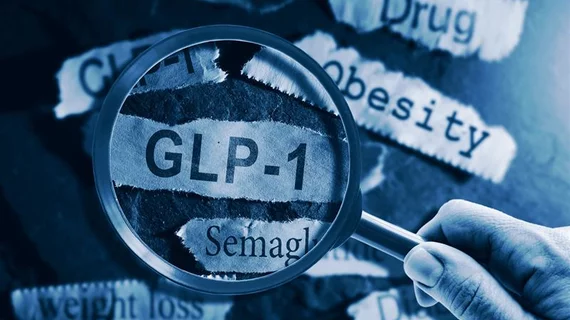
If you’ve spent more than seven seconds on the internet lately, you’ve probably heard whispers (or loud TikTok declarations) about GLP-1 medications and peptides. Suddenly everyone’s cousin, coworker, or favorite reality TV star is talking about medications like Ozempic, Wegovy, or Mounjaro.
And honestly? For many people, these medications can feel life-changing.

People report less obsession with food, reduced cravings, weight loss, fewer binge episodes, and quieting of the infamous “food noise.”

For someone who has spent years battling compulsive eating, white-knuckling diets, or negotiating with themselves over whether a whole bag of chips counts as “a snack,” this can feel miraculous.

And in some ways, it is!

But here’s the part we need to talk about more openly: suppressing the symptoms of food addiction is not the same thing as treating food addiction itself.

Wait… What Even Is Food Noise?

If you know, you know.

Food noise is that relentless mental chatter about food:
“What am I eating next?”
“Should I be good today?”
“I already blew it, so I may as well keep going.”
“Maybe just one bite.”
“Actually… maybe six bites.”

It’s exhausting.

Many people on GLP-1 medications describe the shocking experience of suddenly having a quiet brain around food for the first time in their lives. That alone can create enormous relief — emotionally, mentally, and physically.

And we want to be very clear: There is absolutely no shame in using medication as support.

At SHiFT, we believe people deserve compassionate, evidence-informed care. Medications can absolutely be a helpful piece of support for some individuals, but medications are not the whole solution.

The Fire Alarm vs. The Fire

Imagine food noise like your smoke alarm, blaring constantly.

A GLP-1 medication may help quiet the alarm, but if there’s still an electrical fire burning in the walls…you will need to deal with that.

Food addiction often isn’t just about hunger or appetite. Many people use food to regulate emotions, numb stress, cope with trauma, create comfort, or dissociate from difficult feelings. If those underlying drivers aren’t addressed, the struggle often shifts rather than disappears.

Sometimes that looks like emotional distress resurfacing, transfer addictions, returning compulsive behaviours after stopping medication, or feeling emotionally “unanchored” without food as a coping mechanism.

In other words: the medication may reduce the symptom, while the deeper recovery work still remains.

“But I Lost Weight — Isn’t That Recovery?”

Weight loss and recovery are not automatically the same thing.

That can be a hard statement to hear in a culture obsessed with shrinking bodies at all costs. Someone can lose weight while still obsessing over food, living in shame, and feeling completely out of control internally.

And conversely, someone can be deeply engaged in recovery work before dramatic physical changes ever occur.

Recovery is about far more than the number on a scale. It’s about freedom.

Freedom from obsession. Freedom from secrecy. Freedom from the exhausting cycle of “starting over Monday.”

The Risk Nobody Talks About Enough

One of the most common misunderstandings around GLP-1 medications is the belief that they “cure” food addiction.

For some people, when appetite suppression fades, missed doses happen, or medications stop, old patterns can return surprisingly fast — because the underlying emotional, behavioural, neurological, and relational patterns were never fully addressed.

That’s not failure.
That’s not lack of willpower.
That’s not “doing it wrong.”

It simply means food addiction is complex, and unfortunately, our culture still loves simple answers:

  • “Just eat less.”
  • “Just have more discipline.”
  • “Just take this injection.”

If recovery were that simple, nobody would be crying in a drive-thru parking lot while promising themselves this is the last time.

So… Are GLP-1s Bad?

No!

They are tools, and tools can be incredibly helpful.

For some individuals, these medications:

  • Reduce pressure enough to begin recovery work
  • Create space to build healthier coping strategies
  • Lower compulsive urges
  • Improve metabolic health
  • Increase hope

That matters!!!

But sustainable recovery usually requires additional support too:

  • Community
  • Emotional healing
  • Nervous system regulation
  • Behavioural change
  • Accountability
  • Honest conversations
  • Learning how to live without using food as the primary coping strategy

There’s currently no injection available that teaches boundaries, processes grief, repairs self-worth, or helps someone sit through discomfort without reaching for snacks (though if Big Pharma develops one, we assume the waitlist will be staggering).

Recovery Is Bigger Than Appetite Suppression

At SHiFT, we often say that recovery is not about perfection. It’s about connection, awareness, honesty, and support.

Whether someone uses GLP-1 medications or not, the deeper work of recovery still matters. Because food addiction is rarely just about the food.

It’s about the relationship with the food, the relationship with ourselves, and often, the pain we’ve been trying to soothe all along.

Final Thoughts

GLP-1 medications and peptides may help quiet cravings, reduce compulsive eating symptoms, and support weight loss for some people. That’s real. And for many, it can be incredibly beneficial.

But recovery is more than just reduced appetite or smaller bodies.

Healing still asks bigger questions:

  • What am I using food for?
  • What happens when I feel uncomfortable?
  • Who am I without this coping mechanism?

The good news?
You don’t have to figure that out alone.

And no — you do not need to wait until Monday to begin.

Free Clarity Conversations are available as a first step.

GLP-1s and Food Addiction: The Quick Truth

Lately, it feels like everyone is talking about GLP-1 medications. If you haven’t heard of them, think of semaglutide (Ozempic) or related meds as the “new kid” in the weight-loss neighborhood, showing up with big promises and making everyone curious.

At SHiFT, we get it. New tools are exciting. But as someone who’s been through the cycle — trying every diet, plan, surgery, and yes, even GLP-1s — I’ve learned a hard truth: none of them work long-term if addiction is the real issue underneath.

Here’s the short version of our stance: at SHiFT, we’re not anti–GLP-1. We’re pro-recovery.

Tools Are Tools, Not Cures

GLP-1s, bariatric surgery, keto, abstinent food plans — they can all be useful. But they’re like training wheels on a bike. Sure, they can help you get moving, but if you never learn to balance, you’re going to fall the moment the support comes off. Research shows cravings often return when the medication stops — a clear sign it’s addressing symptoms, not the root cause.

For some, GLP-1 medications can reduce cravings and give you a little breathing room between the urge and the action. That’s significant! But it primarily supports the physical side of food addiction. The mental, emotional, and spiritual parts still need attention, and that’s where recovery work comes in.

The Problem with Quick Fixes

Many people who come to SHiFT have spent decades hearing the same story: “Try this next thing. You’ll lose the weight. Your life will be better.” Spoiler alert: it usually isn’t. Every failed attempt piles on shame and the belief that you are the problem. So when another tool hits the market, promising relief from years of deafening food noise, it’s tempting to jump on board!

GLP-1s are powerful, no doubt — but suggesting them to someone struggling with food addiction without recovery support, is like handing a caffeine-addicted person a triple espresso and saying, “This’ll calm you down.” Not exactly helpful for the root problem.

Our Simple Message

  • Screen first. If food addiction may be playing a role, it needs to be acknowledged.
  • Use as support, not a substitute. GLP-1s may help manage cravings and food noise, but they don’t replace the deeper work of addiction recovery.
  • Keep expectations realistic. Medications can help, but they’re not a magic fix.

At SHiFT, we want people to feel hope — not guilt, shame, or pressure. Tools like GLP-1s can feel miraculous (and sometimes they are!), but the real miracle comes from doing the messy, rewarding work of recovery: learning to understand triggers, navigate cravings, and rebuild your relationship with food and yourself.

So in summary, yes, GLP-1s can play a role and have a seat at the table. But addiction recovery always comes first. And if anyone tries to sell you a “one-thing-fixes-all” story? You have our permission to roll your eyes, and maybe even laugh a little.

Because in recovery, honesty — with yourself, your body, and your journey — is always the best medicine.

If you want help navigating food addiction, please consider booking a Free Clarity Conversation.

My “Do Nothing” Bench

My “Do Nothing” Bench – A community-submitted blog by Lisa K:

It was suggested by a counselor at SHiFT that I sit and “do nothing” for 30 minutes. She suggested I go somewhere calm and relaxing for me and sit doing nothing in this space. I thought, “no problem. I will gladly do nothing for 30 minutes. It will be fun.” I thought about the perfect place to go. I thought about the river nearby where we launch kayaks from with the slowly moving water, the green trees overhead, and the huge and plentiful mosquitoes. I thought, “how can I do nothing if I’m swatting mosquitoes for 30 minutes?” Then I thought about the trails behind our house with a swiftly moving little creek. The next thought was, “how can I do nothing with all the people walking by, the dogs barking, and the kids laughing?” I thought I could sit in my back yard at the fire pit, but again immediately thought, “how can I do nothing staring at the yard that needs flowers planted, the grass mowed, and the trees trimmed?” I’m exhausted and I haven’t found the perfect calm, relaxing place, only a head full of “how can I …?” thoughts.


I then thought about a cultured garden nearby where we are members. It is calm, peaceful, relaxing, with a little pond, and many nooks in the landscape with benches to sit upon while contemplating the nature around them. I thought, “what can I bring with me to do nothing? Can I bring my fabric applique? Can I bring a relaxing book? Can I bring my journal? Can I bring my phone?” Again, feeling exhausted before I even left the house. I brought my keys, driver’s license, the card to get in, and my phone (for emergency purposes, of course) and set out towards the gardens. The whole way there I thought about what I would think about while doing nothing. I thought about how long this excursion was going to take. I thought about how fun it will be to do nothing.


I arrived just as the gardens opened and was sparsely populated. I walked down the path past flowerbeds, lawns, trees, birds, and a few gardeners, looking for the perfect “do nothing” bench. I finally found one tucked away in a garden bed with trees, flowers, and a view of the little pond. I sat down on my “do nothing” bench and panicked. What on earth was I going to do

for 30 minutes? No one to call, nothing to do with my hands, no one to watch. So, I took out my phone and took pictures of the flowers, trees, and pond from my “do nothing” bench. I thought about my to-do list at home, my grocery list for later that day, my recovery tasks for the day, and the thoughts went on for another 15 minutes.


I finally settled down, set my alarm for 30 minutes, and stared at the pond. I looked at the flowers, I discovered 4 different species of butterflies in my little garden bed. I marveled at God’s creation, in amazement of the beautiful colors and shapes, in awe of the quietness that allowed me to hear the woodpecker at the tree to my right. I thanked God for all of this “nothingness.” I noticed my heartbeat slowed down, my breathing became calm and regular, my anxious thoughts vanished. I was left with nothing but God’s love and a peace I have never slowed down enough to feel. If this was “doing nothing” I was falling in love with the experience. When the timer went off and startled me out of my calm, I sat for another 5 minutes taking in the beauty around me and within me. Grateful to God for giving me the gift of experiencing myself alone and without distractions. A beautiful gift, in deed.


I was so excited about my experience that I returned to my “do nothing” bench to share it with my husband. We sat and did nothing for several minutes. Just holding hands in the quiet and calm space, no words, no squeezes, just nothing. I will be returning to my “do nothing” bench regularly to experience myself and the “nothingness” that I loved there. May God continue to bless my “nothingness” and may He continue to reveal myself to me on my “do nothing” bench.


Lisa K

A Tug-of-War With The Past

A tug-of-war with the past is my current state. I have held on to the messages of the past, fostering them, fueling them for decades. It is time to let them go. So easy to say and yet so hard to do.


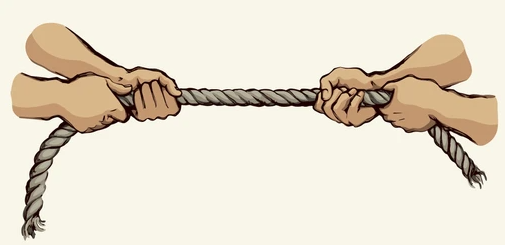
In a recent therapy experience I was given a rope to hold on one side and members of my past role-played on the other side. The members of my past taunted me with messages of high expectations for perfection, pressure to take responsibility beyond my capacity, my inadequacies, fear of others’ poor perceptions of me, and the list goes on. They tugged on the rope trying to bring me closer to them and keep me ensnared in their grip. I tugged back holding onto the lifeline to them and their messages. I began believing them, trying to pull them closer to me all the while they tugged trying to pull me closer to them. Who would win in this battle of wills? Who would be the victor over my thoughts, feelings, body, and soul? Would their messages that I have held onto for decades continue to ring true in me? It seemed they would, until the counselor gently whispered in my ear, “what do you want to say back?”


I gradually began to say things like, “you’re wrong,” “stop taunting me,” “let me be.” They only screamed louder and pulled harder on the rope. It seemed useless and futile to gently ask them to stop, so I screamed louder back at them. Until the thoughts came to me that I could just drop the rope and send them flailing backwards. Could I really do this? What would happen to them? Would they get hurt? The tug-of-war raged in my head around the ideas that I could really let them go all while they screamed at me to maintain my “perfection” and “hyper-responsibility” and I screamed back “stop it!” I finally was too physically tired and weak to keep pulling at that rope, to keep tugging them closer and closer to me. I squealed “I’m done!” and let the rope go, sending my opponents from the past falling backwards to the ground.


I sank to the ground in tears, was it really that easy? All I needed to do was let the members and the messages of the past go? I didn’t need to carry them around with me or hold them close to my head and heart? Hmmm. What do I fill my head with now? What do I feel in my heart now? The counselor pulled me up off the ground and sat me in a chair next to her. She stroked my hair and wiped tears from my face telling me, “You don’t have to carry them with you anymore. You are free to be you. You are free to be who God created you to be.” I continued to sob as I let go of past expectations and saw myself as a daughter of The King.


I actually won the tug-of-war with my past. I let go of the past and the power it had over me. My tears stopped and I stood up tall and free that evening, without a care in the world that I needed to fix. There are many areas of my life that I am called by God to let go. I want to live happy, joyous, and free today without the taunting messages of the past haunting me. I truly forgave the members of my past for the messages they gave me both explicitly and implicitly. They no longer rule my mind, heart, or soul. I am free!

Lisa K

A Drive Thru Life

My husband sent me this picture during a recent work trip abroad with the caption, “Isn’t this funny? I thought of you.” At first, I thought maybe “fat” was a way of saying “really cool” in the country in which he was traveling. Then I thought, “isn’t it nice he is thinking of me?” While I was thrilled he was thinking of me while traveling, it very quickly brought up some deep shame about my food addiction and the drive thru life I have led for most of my life. Those yellow McDonald’s arches represent the epidemy of the fast-food industry for me. They represent the quick, easy, poor quality, instant gratification I had come to know and love throughout my life. They drew me in to the drive thru line many times as a child and teenager only to become a daily occurrence in the last decade of my binging. In fact, by the end of my drive thru life, McDonald’s was the main sustenance I ingested not just daily but multiple times per day. I had a breakfast, mid-morning snack, lunch, afternoon pick-me-up, dinner, and I-have-to-stay-awake nighttime order at the ready. I would only pick up food through the drive thru or have it delivered so that no one would really see how much I was eating at one time or what my binges really looked like.

I was stopping on the way to work, between work locations, on the way home from work, to OA meetings, on the way home from OA meetings, I even left OA meetings half way through in order to get food to settle my unpleasant feelings during those meetings. I was showing up to OA meetings, but I was very quiet, never really speaking, not participating, not doing service, only sitting and listening to how uncomfortable I felt. I didn’t take in what others were saying and rarely would apply it to my own life. I would listen to the Alcoholics Anonymous Big Book being read and thought, “wow, those alcoholics are really bad off, I’m glad I’m not one of them.” All the while I was binging at a rate that was out-of-control, not being able to stop once I started and not being able to stop myself from starting. I wanted instant gratification, I wanted an easy life with quick fixes, I wanted everything handed to me without a care for the quality of what it was or how it got to me, I wanted to hide myself and my food consumption. I kept looking for the magic pill, supplement, acupuncturist, or doctor who would solve all my problems in life with one easy solution. I was living a quick, easy, secretive drive thru life, not truly participating in it fully, expecting no real solution.

I was driving through life never really stopping to assess where my life was or where it was going, I was just speeding down the highway of life towards an early death at the ripe old age of 53, when I shoved the last Big Mac into my mouth and God showed me SHiFT Recovery by Acorn. This was the shift I truly needed. At first, I expected it to be the same quick, easy, poor quality “food” I had become accustomed to in my life. But I was very wrong about every aspect of that expectation. Working and more importantly, living, recovery through Shift was far from quick or easy. It was the high-quality sustenance my body, heart, and soul needed. Shift presented me with a program for living that challenged me and shook me to the core. I could no longer hide in a room full of people. I remember the first few days of my virtual intensive when I was sitting as far away from the computer screen as possible with as little of me showing as possible. I was challenged to stop hiding and actually show up and be present to the group. I was also required by Shift staff to participate in the Shift Strong Call zoom meetings by being on camera and speaking at every meeting, introducing myself and sharing my feelings along with an issue that was current in my life. I could no longer live a secretive drive thru life, I had to be present to myself and others. I not only had to share myself with others in recovery, I had to listen to others and follow their lead.

I am continuing to learn how to slow down and stop speeding through life only pausing long enough to drive thru a fast-food joint for my quick, easy, secretive fix. I am learning that there is no quick and easy fix, there is only slow and methodical methods for living a life full of happiness and true sustenance. I am learning to pause, feel into my heart for my deeper fears and longings, and to surrender them all to God. I am learning to stop and savor a life worth living in recovery, one small miracle at a time.

– Lisa K